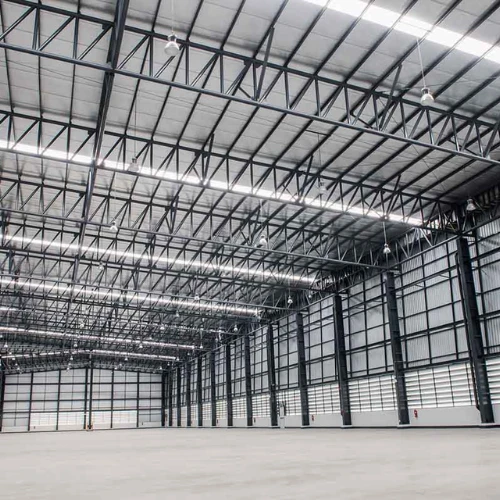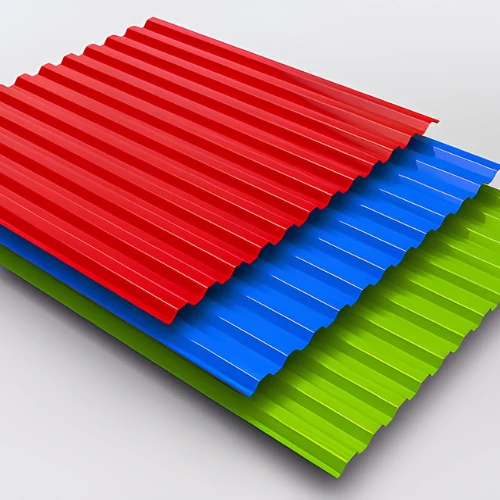
Selecting Metal Roofing Sheets for a factory, warehouse, industrial shed or Pre-Engineered Building (PEB) requires more than comparing prices and colours. The roofing system is continuously exposed to heat, rain, wind, dust, moisture and, in some industries, corrosive environments. A wrong specification can therefore result in leakage, excessive indoor heat, corrosion, frequent repairs or premature replacement.
The right roofing solution should be selected according to the building’s use, structural design, environmental exposure and long-term performance requirements.
Before finalising metal roofing for an industrial project, buyers, engineers and project teams should evaluate factors such as material, thickness, protective coating, sheet profile, insulation, supporting structure, drainage and installation. This checklist explains the key considerations that can help you make a more informed decision.
Why Does the Right Roofing Specification Matter?
An industrial roof is part of an integrated building system. It must work effectively with purlins, fasteners, insulation, flashing, gutters, and the overall structural design.
For example, a standard warehouse and a chemical processing facility may have very different requirements even if both use metal roofing.
Similarly, a manufacturing plant that generates significant internal heat may need a different roofing configuration from a storage facility where temperature control is less critical.
A suitable specification can contribute to:
- Reliable weather protection
- Better resistance to corrosion
- Appropriate structural performance
- Improved thermal comfort
- Lower maintenance requirements
- Efficient rainwater drainage
- Longer service life
- Better integration with the PEB structure
Instead of treating roofing sheets as an isolated product, evaluate the complete roofing system.
1. Start With the Building’s Intended Use
Before selecting a sheet specification, clearly define what happens inside the building.
Metal roofing is commonly used for:
- Warehouses
- Manufacturing facilities
- Industrial sheds
- Logistics centres
- Workshops
- Commercial buildings
- PEB structures
- Refineries and power plants
Each application can create different requirements.
For example, a warehouse primarily used for dry storage may prioritise weather protection, durability, and economical large-area coverage. A manufacturing facility may need additional attention to ventilation and thermal performance. A facility exposed to chemicals or corrosive substances may require greater consideration of material and coating specifications.
Therefore, the first question should not be “Which roofing sheet is cheapest?”
It should be:
“What does this building require from its roofing system?”
2. Evaluate the Environmental Conditions
The environment surrounding the building can significantly influence roofing performance.
Before choosing Metal Roofing Sheets, evaluate exposure to:
- High temperatures
- Heavy rainfall
- Humidity
- Industrial pollutants
- Chemicals or fumes
- Dust
- Strong winds
- Coastal or saline conditions
A sheet suitable for a normal warehouse may not necessarily be appropriate for an aggressive industrial environment.
The protective coating and material specification should therefore be selected according to actual exposure conditions rather than using the same specification for every project.
For projects in Ahmedabad and other parts of Gujarat, heat, seasonal rainfall, and dust are among the practical environmental factors that should be considered during roofing-system selection.
3. Check the Roofing Material and Protective Coating
Not all metal sheets offer the same performance.
Industrial roofing can use different coated-steel systems depending on the project requirements. When reviewing quotations, ask the manufacturer to clearly specify the base material and coating system.
Important questions include:
- What is the base metal?
- What protective coating is applied?
- Is the sheet suitable for the site’s environmental exposure?
- What corrosion protection does the coating provide?
- Is the finish suitable for the intended industrial application?
- What product warranty applies?
Protective coatings become particularly important where the roof will face moisture, industrial emissions, or other potentially corrosive conditions.
Avoid choosing roofing based only on appearance. Two sheets that look similar can have substantially different technical specifications.
4. Select the Appropriate Sheet Thickness
Thickness is an important consideration, but thicker is not automatically better for every building.
The required sheet thickness should be determined according to factors such as:
- Structural design
- Purlin spacing
- Sheet profile
- Wind pressure and suction
- Maintenance loads
- Building location
- Roof geometry
- Manufacturer’s design recommendations
Using an unnecessarily heavy specification can increase project cost, while selecting a sheet that is inadequate for the intended span or loads can affect roofing performance.
The correct approach is to coordinate sheet thickness with the building’s structural and roofing design rather than selecting it independently.
For a more detailed understanding of this particular factor, Choice Pre-Fab has also published a dedicated guide covering the selection of gauge and thickness for metal roofing.
5. Examine the Sheet Profile
The profile is another factor that can easily be overlooked when buyers focus primarily on thickness and price.
Roofing sheets are formed into profiles that provide stiffness and influence water flow, spanning behaviour, fixing arrangements, and appearance.
When evaluating a profile, consider:
- Rib depth
- Rib spacing
- Effective cover width
- Purlin spacing
- Roof slope
- Fastening method
- Required span
- Water drainage
- Compatibility with associated components
The profile should be selected as part of the roofing system rather than simply for visual preference.
This is especially important for large industrial roofs where even small design or installation inconsistencies can be repeated across a substantial roof area.
6. Consider Thermal Performance and Insulation
Metal roofing provides durable weather protection, but the thermal requirements of the building should also be assessed.
Factories and warehouses can experience significant heat gain through the roof, particularly in hot climates.
Ask:
- Does the building need thermal insulation?
- Is temperature control important to operations?
- Will people work inside the facility for long periods?
- Are temperature-sensitive materials stored inside?
- Is mechanical cooling used?
- Would an insulated roofing system be more appropriate?
Depending on the project, insulation can be integrated into the roofing system to reduce heat transfer and improve internal conditions.
Choice Pre-Fab provides metal roofing alongside insulated roofing solutions, allowing roofing specifications to be considered according to the building’s operational requirements.
7. Check Compatibility With Purlins and the Supporting Structure
Roofing sheets do not perform independently. They transfer loads to the secondary framing, which then transfers those loads through the primary structure.
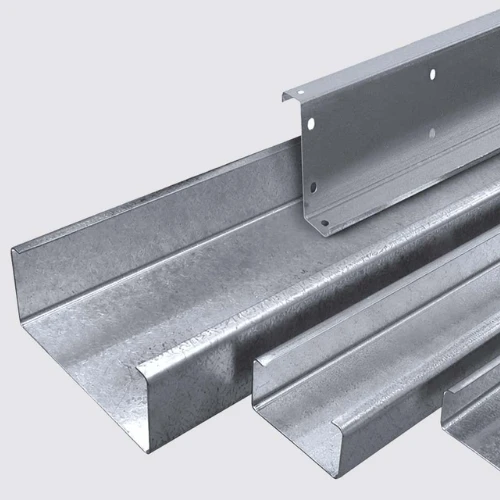
In many PEB projects, Z or C purlins provide support for the roofing system.
Therefore, roofing selection should consider:
- Purlin type
- Purlin spacing
- Sheet span capability
- Connection details
- Fastener positioning
- Roof geometry
- Expected loads
Changing the roofing specification without considering the supporting structure can create compatibility problems.
For this reason, coordination between the structural designer, roofing manufacturer, and project team is important.
8. Pay Attention to Fasteners and Connections
Even a high-quality roofing sheet can develop problems if the fastening system is poorly specified or installed.
Fasteners help secure the roofing sheets to the supporting structure and must perform under environmental and structural loads.
Check:
- Fastener type
- Fastener material
- Corrosion resistance
- Washer and sealing system
- Spacing
- Installation method
- Compatibility with the roofing sheet
Incorrect fastening can contribute to issues such as water ingress, sheet movement or local damage.
Industrial buyers should therefore evaluate roofing sheets and their fixing system together.
9. Plan Roof Slope and Rainwater Drainage
Water management is a fundamental part of industrial roof design.
The roof profile, slope, gutters, downspouts, flashing, and drainage capacity should work as a coordinated system.
Before finalising the roof, evaluate:
- Roof slope
- Rainfall conditions
- Gutter capacity
- Downspout locations
- Valley areas
- Flashing details
- Drainage routes
- Potential water accumulation points
Poor drainage design can create problems even when good-quality roofing materials are used.
Choice Pre-Fab’s roofing solutions include supporting components such as roofing purlins and roof gutters, allowing the roof covering and drainage elements to be considered as part of the wider building system.
10. Check Flashing, Trims and Roof Penetrations
Industrial roofs often include much more than continuous roofing sheets.
They may contain:
- Ridge areas
- Eaves
- Roof edges
- Ventilation openings
- Skylights
- Roof monitors
- Exhaust systems
- Service penetrations
- Transitions between roof sections
These areas require appropriate detailing.
Trims and flashing help close junctions and protect vulnerable areas against water entry.
When reviewing a roofing proposal, check whether the required flashing and trims are included rather than assuming they are automatically part of the quotation.
11. Consider Natural Lighting and Ventilation Requirements
Industrial buildings often benefit from carefully planned natural lighting and ventilation.
Where daylight is required, polycarbonate rooflight panels may be integrated strategically with the main metal roofing system.
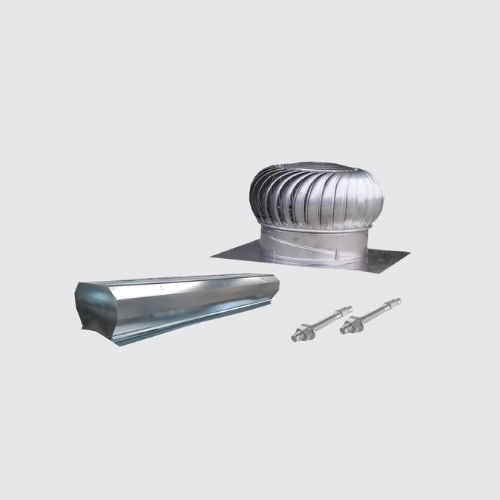
Similarly, ventilation systems such as roof ventilators or other project-specific solutions may be incorporated according to the building’s operational requirements.
The key consideration is system compatibility.
Rooflights, ventilators and other penetrations should be coordinated with the sheet profile, flashing and structural layout so that adding functionality does not compromise weather protection.
12. Review Installation Requirements
Product quality alone cannot compensate for poor installation.
Before choosing a roofing supplier, understand how the sheets will be:
- Transported
- Unloaded
- Stored on site
- Lifted onto the structure
- Aligned
- Fixed
- Lapped
- Sealed
- Integrated with trims and gutters
- Inspected after installation
Incorrect handling can damage protective coatings before the roof is even installed.
Similarly, poor alignment, incorrect overlaps or unsuitable fastening practices can affect weather tightness and long-term performance.
Installation capability should therefore form part of the purchasing decision.
13. Compare Total Value Instead of Price Per Sheet
One of the biggest purchasing mistakes is comparing roofing quotations only on the basis of price.
Two quotations may appear to cover the same roof but contain different specifications.
Use a comparison like this:
| Factor | What to Compare |
| Base material | Type and specification |
| Thickness | Actual specified thickness |
| Coating | Type and protective system |
| Profile | Rib design and effective width |
| Insulation | Included or excluded |
| Fasteners | Type and quality |
| Flashing and trims | Scope included |
| Gutters | Included or separate |
| Transportation | Included or excluded |
| Installation | Scope and responsibility |
| Warranty | Terms and coverage |
| Technical support | Design and installation guidance |
A lower initial material price does not necessarily mean a lower total project cost.
The better comparison is based on technical suitability, complete scope, installation requirements, expected maintenance and long-term performance.
14. Evaluate the Manufacturer’s Technical Capability
Finally, check who is manufacturing or supplying the roofing system.
An industrial roofing manufacturer should be able to understand how the roofing interacts with the overall building.
Evaluate factors such as:
- Manufacturing capability
- Quality-control processes
- Technical knowledge
- Product range
- Customisation capability
- PEB experience
- Installation support
- Ability to provide associated roofing components
- Experience with similar industrial projects
This becomes particularly valuable when roofing is part of a larger PEB project.
Choice Pre-Fab LLP provides roofing and wall panels alongside PEB structures, Z/C purlins, trims, flashing and accessories. This integrated product range can help project teams coordinate structural and roofing requirements through a single PEB ecosystem.
A Practical Checklist Before Finalising Metal Roofing Sheets
Before approving your roofing specification, confirm the following:
- Building use has been clearly defined
- Environmental exposure has been assessed
- Base material and coating are specified
- Suitable thickness has been determined
- Sheet profile matches structural requirements
- Purlin spacing has been considered
- Thermal insulation requirements have been evaluated
- Fasteners and sealing systems are specified
- Roof slope and drainage are properly planned
- Flashing and trims are included
- Rooflights and ventilation are coordinated
- Installation responsibility is clear
- Warranty terms have been reviewed
- Quotations are being compared on equivalent specifications
If several of these details are missing from a quotation, it may be too early to make a price-based decision.
Conclusion
Choosing the right Metal Roofing Sheets for an industrial project requires a complete understanding of the building rather than focusing on a single specification such as thickness or price.
Building use, environmental exposure, coating, sheet profile, structural support, insulation, fasteners, drainage, and installation all influence how effectively the roofing system performs over time.
For warehouses, factories, industrial sheds and PEB projects, the most effective approach is to coordinate the roofing system with the overall structural design from the beginning.
Choice Pre-Fab LLP provides metal roofing, insulated roofing, and associated PEB components for industrial and commercial projects. If you are planning a new industrial building or reviewing roofing requirements for an upcoming project, consult the Choice Pre-Fab team to evaluate a roofing solution according to your project’s structural and operational needs.
Frequently Asked Questions
What should I check before buying Metal Roofing Sheets?
Check the base material, coating, thickness, profile, structural compatibility, environmental exposure, insulation requirements, fasteners, drainage system, installation method, and warranty. These factors should be evaluated together rather than selecting sheets based only on price.
How do I choose the right thickness for industrial roofing?
The appropriate thickness depends on the roofing profile, purlin spacing, wind conditions, structural loads, roof geometry, and manufacturer recommendations. It should therefore be determined according to project-specific engineering requirements.
Do metal roofs need insulation in industrial buildings?
Not every building requires the same insulation system. However, warehouses, factories and temperature-sensitive facilities may benefit from roof insulation where reducing heat transfer or maintaining internal conditions is important.
What coating should be selected for industrial metal roofing?
The appropriate coating depends on environmental exposure, including moisture, humidity, industrial pollutants, chemicals, and coastal conditions. The manufacturer or project engineer should recommend a coating system suited to the actual operating environment.
Why are purlins important when selecting roofing sheets?
Purlins support the roofing sheets and help transfer roof loads to the primary structure. Sheet profile, thickness, span capability, and fastening arrangements should therefore be compatible with the purlin design and spacing.
Should I select industrial roofing based on the lowest quotation?
No. Compare equivalent specifications, coatings, accessories, installation scope, warranty, and technical support. A lower quotation may exclude important components or use a different specification, making direct price comparison misleading.
Related Reading
For a broader understanding of roofing options, their characteristics and industrial applications, read Metal Roofing Sheets for Industrial Buildings – Benefits, Types & Applications.