Effective water management is the unsung hero of industrial longevity. While often overlooked, it is arguably the most critical factor in preventing premature building degradation. When heavy rains hit, a facility relies entirely on efficient industrial roof drainage to channel water away from the roof and foundation. If the gutters and downspouts fail, the result is water intrusion, damaged inventory, and weakened structural integrity.
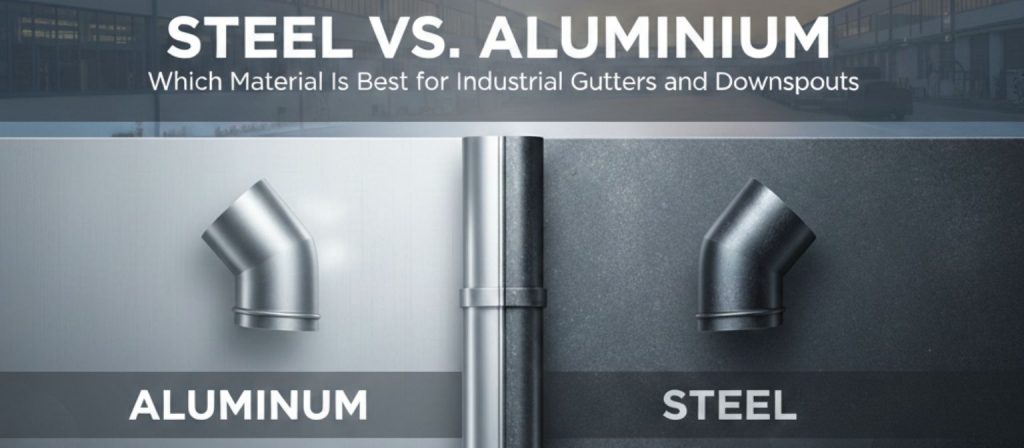
For warehouse owners and factory managers, the decision often comes down to two primary materials: Steel and Aluminum. While residential projects may favour one, the demands of an industrial environment are vastly different.
This guide breaks down the pros and cons of each material to help determine which system best protects an industrial investment.
The Role of Industrial Roof Drainage
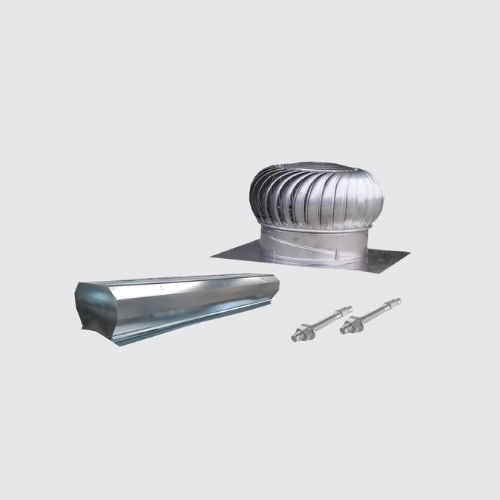
Before comparing materials, it is essential to understand the workload. Gutters and downspouts in an industrial setting are not just handling a light drizzle. They must manage massive volumes of water runoff from large surface area roofs.
Weak systems buckle under the weight of water or warp under thermal expansion. This is why selecting the right material is not just about aesthetics. It is about engineering and longevity.
Aluminium Gutters: The Lightweight Contender
Aluminium is a popular choice in the general construction market. Many standard commercial gutter systems utilize aluminum because it is widely available and easy to work with.
Pros of Aluminium
- Corrosion Resistance: Aluminium naturally resists rust. When exposed to air, it forms an oxide layer that protects the metal beneath. This makes it a decent option for facilities near the coast.
- Lightweight: Being lighter than steel, it places less dead load on the fascia or roof structure, making it suitable for retrofitting older buildings with limited load capacity.
- Ease of Installation: Because it is easy to cut and shape, installation crews can often complete the job quickly.
Cons of Aluminium
- Structural Weakness: This is the biggest drawback for B2B applications. Aluminium is prone to denting and bending. In an industrial environment where high winds or debris are common, aluminium gutters and downspouts may deform.
- Thermal Expansion: Aluminium expands and contracts significantly with temperature changes. Over time, this movement can loosen fasteners and cause leaks at the joints.
Steel Gutters: The Industrial Heavyweight
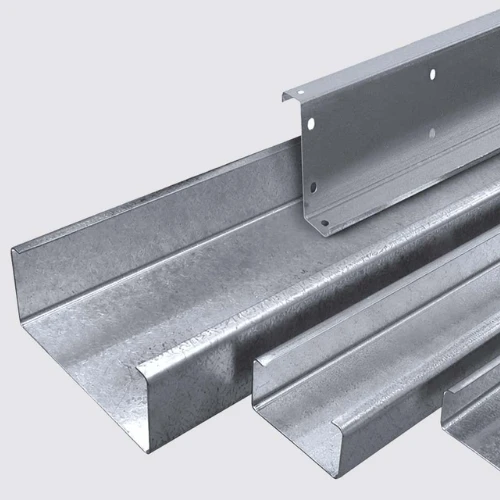
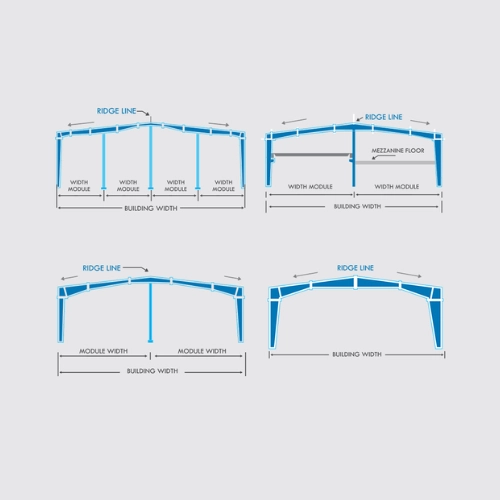
For pre-engineered buildings (PEBs) and heavy industries, galvanised steel gutters are often the standard. However, the quality of steel matters immensely.
Pros of Steel
- Superior Strength: Steel is incredibly robust. It can withstand heavy loads, including accumulated debris or water during torrential downpours, without sagging.
- Durability: Galvanised steel offers excellent resistance to physical damage. It is less likely to dent if hit by ladders or maintenance equipment.
- Consistency with Structure: Most industrial buildings are framed with high-grade steel (like E350 grade). Utilising steel PEB gutter systems ensures the drainage shares the same coefficient of thermal expansion as the primary structure. This eliminates the warping and joint stress often caused by differential movement between dissimilar materials.
Cons of Steel
- Perceived Corrosion Risk: The primary concern with steel historically has been rust. However, this is largely a problem of the past or low-quality manufacturing. Modern industrial steel components are heavily treated to prevent this.
Why Industrial Projects Lean Towards Steel
At Choice Prefab, we often see that steel is the superior choice for large-scale facilities, provided it is treated correctly. The “rust myth” is debunked when you look at modern engineering specs.
1. The Importance of Material Sourcing
Standard steel might fail, but high-quality steel does not. When gutters and downspouts are fabricated from prime steel sourced from primary producers like TATA, ESSAR, or JSW, the base chemistry of the metal ensures higher longevity compared to secondary market steel.
2. Advanced Coatings and Paint Technology
The longevity of steel gutters and downspouts depends on the protective coating. For industries like Chemical, Plastic, or Pharma, where corrosive fumes might be present, standard galvanisation is not enough.
Applying a high-performance paint system, such as Epoxy or PU (Polyurethane), over the galvanised substrate creates a dual-layer barrier. A critical factor here is the Dry Film Thickness (DFT). We adhere to a minimum Dry Film Thickness (DFT) of 120 Micron. This industrial standard ensures the steel substrate is hermetically sealed against moisture and harsh chemicals, far exceeding standard commercial specifications. This makes the steel virtually as rust-resistant as aluminium but with double the strength.
3. Leak-Proof Engineering
Regardless of whether you choose steel or aluminium, the system is only as good as its joints. Gutters and downspouts usually fail at the seams.
To guarantee a leak-proof roof, the joining technology must be flawless. Using industrial-grade sealants like Resibond Silicon and Talon Tack Tapes prevents water from seeping through laps and joints. Steel provides a rigid surface that allows these tapes to adhere better without the flexing that occurs in aluminium.
Which Material Is Right for Your Project?
Use this decision matrix to determine the best gutter material for industrial buildings based on your specific project requirements.
| Project Scenario | Recommended Material | Engineering Logic |
| Small Commercial Units | Aluminum | Sufficient for low roof runoff where load-bearing capacity is not critical. |
| Heavy Industrial Warehouses | Steel | Provides the necessary rigidity for large surface areas and spans. |
| High Wind & Heavy Rain Zones | Steel | Resists deformation and handles massive water loads without sagging. |
| Coastal Sites (Budget Restricted) | Aluminum | Natural oxide layer resists salt corrosion without the need for premium coatings. |
| Long-Term Structural Alignment | Steel | Matches the thermal expansion coefficient of the PEB structure, preventing joint stress. |
Conclusion
While aluminum has its place in residential and light commercial sectors, steel remains the king of industrial applications. When engineered with the right grade of steel and protected by high-DFT Epoxy or PU coatings, steel gutters and heavy-duty downspouts offer the perfect balance of strength and longevity.
A robust drainage system protects the building foundation and valuable inventory. Investing in a well-engineered solution today prevents expensive repairs tomorrow.
At Choice Prefab, we ensure every component, from primary members to drainage systems, stands the test of time. Contact us today to discuss how we can engineer a durable, leak-proof solution for your next project.
Frequently Asked Questions (FAQs)
Q1: How often should industrial gutters and downspouts be inspected?
A: It is recommended to inspect them at least twice a year, ideally before the monsoon season and after autumn. Regular checks ensure that debris is removed and that sealants like Talon Tack Tapes remain intact.
Q2: Can steel gutters resist rust in chemical factories?
A: Yes. While standard steel can rust, applying specialised Epoxy or PU paint with a thickness of at least 120 Micron provides excellent resistance against chemical corrosion and weathering.
Q3: What is the main advantage of steel over aluminum for warehouses?
A: Strength. Steel gutters and downspouts can handle much heavier water loads without sagging. This is crucial for warehouses with large roof surface areas where water accumulation can be significant.
Q4: How do you prevent leaks at the gutter joints?
A: Leaks are prevented by using high-quality sealants. We recommend using industry-standard solutions like Resibond Silicon and heavy-duty tapes to seal the laps effectively.
Q5: What is the best gutter material for commercial buildings?
A: For long-term durability and structural integrity in commercial buildings, coated steel is generally the best option due to its superior load-bearing capacity and resistance to thermal distortion.