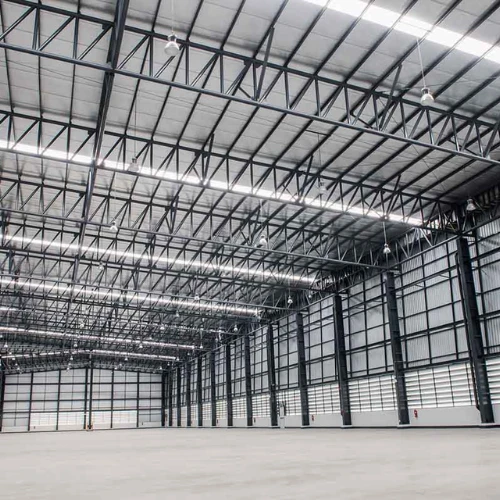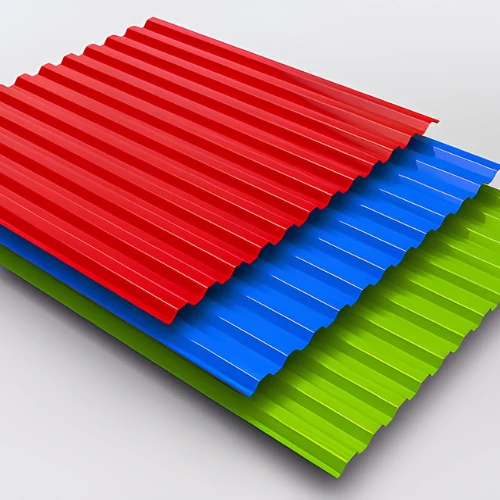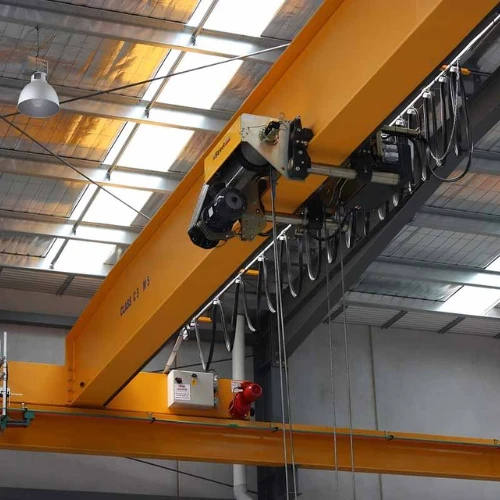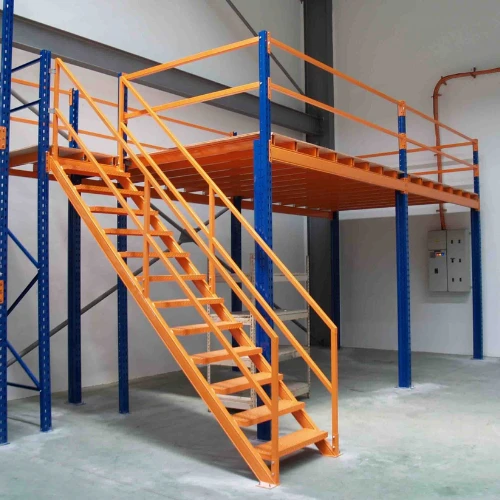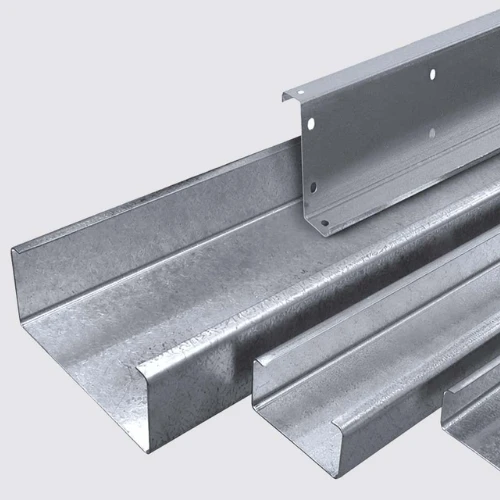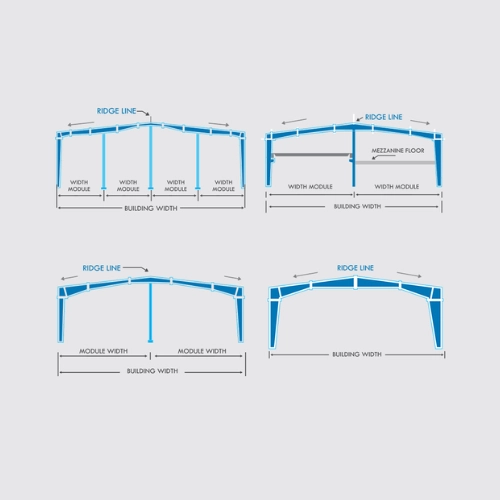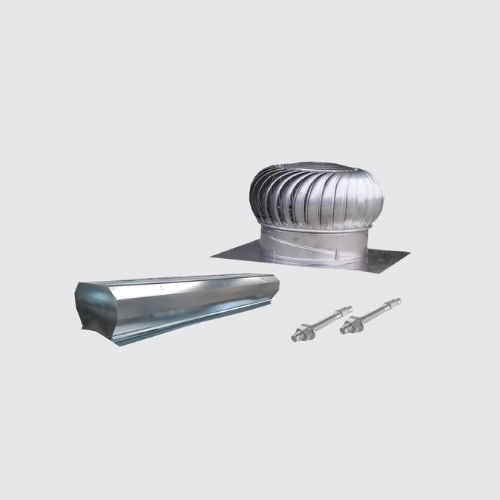
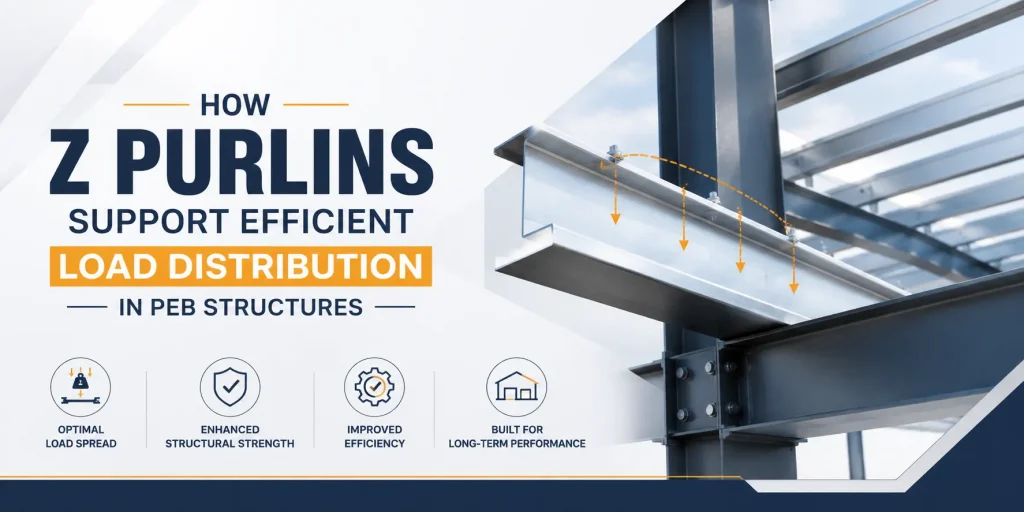
A pre-engineered building depends on the coordinated performance of several structural components. While primary frames carry the main structural loads, secondary members play an equally important role in transferring forces and supporting the building envelope. Among these components, Z Purlins are widely used to support roofing and wall systems while helping distribute loads towards the primary structural frame.
Their importance goes beyond simply holding roof sheets in position. Properly designed purlins help create a continuous load-transfer path between the roof system and the main frame. Their strength-to-weight characteristics, structural configuration, and ease of installation make them suitable for warehouses, factories, logistics facilities, and other industrial buildings.
Understanding how Z purlins contribute to load distribution can help project owners, engineers, and contractors make better decisions when planning efficient PEB structures.
What Role Do Purlins Play in a PEB Structure?
Purlins are secondary structural members positioned between the primary framing system and the roof or wall panels. Their basic function is to provide intermediate support for the building envelope while transferring applicable loads to the main structural members.
In a typical PEB, the load path can be understood broadly as:
Roof or wall system → Purlins → Primary frame → Columns → Foundation
This coordinated system allows different structural elements to perform specific functions instead of requiring the primary frame to support every part of the building envelope directly.
Roofing materials, maintenance loads, wind effects, and other applicable forces are transferred through the secondary framing system. The purlins therefore need to be appropriately designed and positioned according to the project’s structural requirements.
Choice Pre-Fab LLP identifies its Z/C purlins as integral components of PEBs that provide support to roofing and wall systems.
How Do Z Purlins Help Distribute Structural Loads?
Supporting Roof Loads
One of the primary functions of Z purlins is to provide support beneath the roofing system. Instead of roof sheets spanning large unsupported distances, purlins provide intermediate support at designed locations.
This helps transfer the applicable roof loads towards the primary structural frame. The exact spacing and member selection depend on factors such as the roof system, structural design, loading conditions, and project requirements.
A properly engineered arrangement helps maintain the stability and performance of the roof system while avoiding unnecessary structural material.
Creating an Efficient Load Transfer Path
Structural efficiency depends on how effectively forces move through the building. Z purlins form part of this load-transfer path by connecting the roof system with the primary frame.
When the secondary framing is correctly designed, loads can be transferred progressively rather than being concentrated unnecessarily on individual components. This coordinated approach supports the overall stability of the PEB.
The purlins themselves are not a replacement for the primary frame. Instead, they work together with rafters, columns, roof panels, and other components to create a complete structural system.
Supporting Wall Systems
Although commonly associated with roofing, purlins can also support wall systems in appropriate PEB configurations. They provide a framework for wall panels and help transfer relevant forces towards the main structure.
This makes the selection and design of secondary framing important not only for roof performance but also for the overall building envelope.
Why the Strength-to-Weight Ratio Matters
An efficient structural system needs to provide adequate strength without introducing unnecessary weight. This is one of the important advantages associated with cold-formed steel purlins.
Choice Pre-Fab LLP states that its Z/C purlins are manufactured from premium-quality steel and designed to provide a high strength-to-weight ratio.
A favourable strength-to-weight ratio can help engineers develop efficient secondary framing systems while controlling the amount of structural material required.
This does not mean that lighter is automatically better. The appropriate member must always be selected according to engineering calculations and project-specific loading conditions. The objective is to achieve the required structural performance with an efficient use of material.
How Z Purlins Contribute to Material Efficiency
Material efficiency is an important consideration in modern PEB construction. A building does not necessarily become better simply by using more steel. Excess material can increase structural weight and project costs without providing proportional benefits.
Z purlins can contribute to efficient construction when their profile, dimensions, spacing, and connections are properly engineered for the application.
Their use allows the secondary framing system to be designed around actual project requirements rather than relying on unnecessarily heavy conventional members.
Choice Pre-Fab LLP specifically positions its Z/C purlins as solutions designed to provide load-bearing capability while using material efficiently.
Why Z Purlins Are Useful for Large Industrial Structures
Large warehouses, manufacturing facilities, and logistics buildings often require efficient roof framing because of their considerable dimensions.
In these applications, secondary framing has to work effectively with the primary structure across the building’s roof and wall systems. Z purlins can be particularly useful where the structural design calls for efficient secondary members and suitable continuity between supported sections.
Their applications at Choice Pre-Fab LLP include warehouses, industrial sheds, factories, cold storage facilities and logistics centres, along with commercial buildings and other large structures.
For large industrial projects, the purlin system should therefore be considered as part of the complete structural design rather than as an isolated roofing component.
How Connections Affect Load Transfer
The effectiveness of a purlin system depends not only on the member itself but also on how it connects with surrounding structural components.
Connections transfer forces between purlins and the primary frame. Their design, positioning, and installation therefore need to correspond with the structural drawings and engineering requirements of the project.
Poorly executed connections can compromise the intended performance of an otherwise suitable structural member. This is why precision fabrication and installation are important considerations when selecting a manufacturer.
Choice Pre-Fab LLP states that its Z/C purlins are precision-engineered for project-specific requirements and designed for seamless assembly.
How Corrosion Protection Supports Long-Term Performance
Structural efficiency must be considered alongside durability. Purlins installed within industrial buildings can be exposed to moisture, humidity, and other environmental conditions depending on the location and application.
Protective coatings can help improve resistance to corrosion and support longer service life when the appropriate specification is selected for the environment.
Choice Pre-Fab LLP offers galvanised or coated Z/C purlins designed to withstand demanding environmental conditions and reduce maintenance requirements.
The appropriate corrosion-protection system should always be selected according to the project’s exposure conditions rather than applying the same specification to every building.
What Should Be Considered When Selecting Z Purlins?
Selecting a suitable purlin system requires more than choosing a particular profile. Engineers and project teams should evaluate the complete application.
Important considerations include:
- Building dimensions and structural configuration
- Roof and wall system requirements
- Applicable dead and imposed loads
- Wind and environmental conditions
- Purlin spacing
- Connection requirements
- Material specification
- Corrosion exposure
- Installation requirements
- Future operational needs
The purlin selection should ultimately be based on engineering calculations and the project’s structural design rather than a generic rule.
Why Manufacturing Quality Matters
Even a well-designed structural system depends on consistent manufacturing. Variations in dimensions, fabrication accuracy, or protective treatment can affect installation and overall performance.
An experienced Z Purlins manufacturer should therefore have appropriate engineering, fabrication and quality-control capabilities.
Choice Pre-Fab LLP manufactures Z and C purlins as part of its broader PEB component range and highlights precision engineering, quality materials and corrosion-resistant treatment as key characteristics of its products.
An integrated manufacturing approach can also make coordination easier between purlins, roofing systems, wall panels, and the primary PEB structure.
Conclusion
Z purlins are an important part of the secondary framing system in many pre-engineered buildings. Their role is not limited to supporting roof sheets. When properly engineered, they help create an efficient load-transfer path between the building envelope and the primary structural frame, while contributing to material efficiency and structural stability.
Their strength-to-weight characteristics, adaptable profiles, protective coatings, and installation efficiency make them suitable for a wide range of industrial applications. However, the correct purlin configuration should always be determined according to the specific structural requirements of each project.
For businesses planning warehouses, factories, logistics centres or other industrial facilities, choosing properly engineered Z Purlins and coordinating them with the complete PEB design can contribute to a stronger and more efficient building system.
Choice Pre-Fab LLP manufactures Z/C purlins for PEB applications and offers customised solutions based on project requirements.
Explore Related PEB Resources
For a deeper understanding of PEB structural components and related systems, explore:
- The Complete Guide to Roofing Purlins for Industrial Buildings and PEB Structures
- How to Choose the Right Zed Purlins for PEB Structures
- Zed Purlin or C-Purlin? The Engineer’s Guide to Selecting the Right Profile for Your Roof
- The Importance of Z and C Purlins in Supporting Heavy-Duty Metal Roofing Sheets
- How to Calculate Structural Load-Bearing Capacity
These resources cover related aspects of purlin selection, structural loading, and PEB roofing systems without changing the primary intent of this article.
Frequently Asked Questions
What are Z Purlins used for?
Z Purlins are secondary structural members commonly used to support roofing and wall systems in pre-engineered buildings. They help transfer applicable loads towards the primary structural frame.
How do Z Purlins support load distribution?
They form part of the load-transfer path between the roof or wall system and the primary frame. Their position, spacing, profile and connections are designed according to the structural requirements of the building.
Are Z Purlins suitable for warehouses?
Yes. Z purlins are commonly used in warehouses, industrial sheds, factories and logistics facilities. Their suitability depends on the specific structural design and loading requirements of each project.
What makes Z Purlins structurally efficient?
Their profile can provide an effective strength-to-weight ratio, allowing secondary framing to be designed efficiently. The actual member selection must still be based on engineering calculations.
Can Z Purlins be protected against corrosion?
Yes. Z/C purlins can be galvanised or provided with suitable protective coatings to improve resistance to environmental exposure. The appropriate protection depends on the project’s operating conditions.
Can Z Purlins be customised?
Yes. Z purlins can be specified according to project requirements, including the structural configuration, loading conditions, and installation requirements. Choice Pre-Fab LLP states that its Z/C purlins can be tailored to specific project requirements.