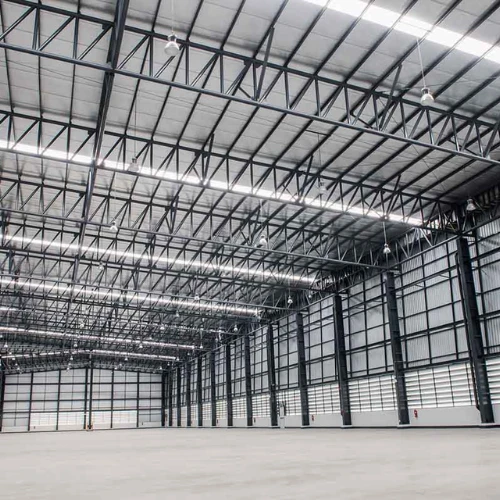
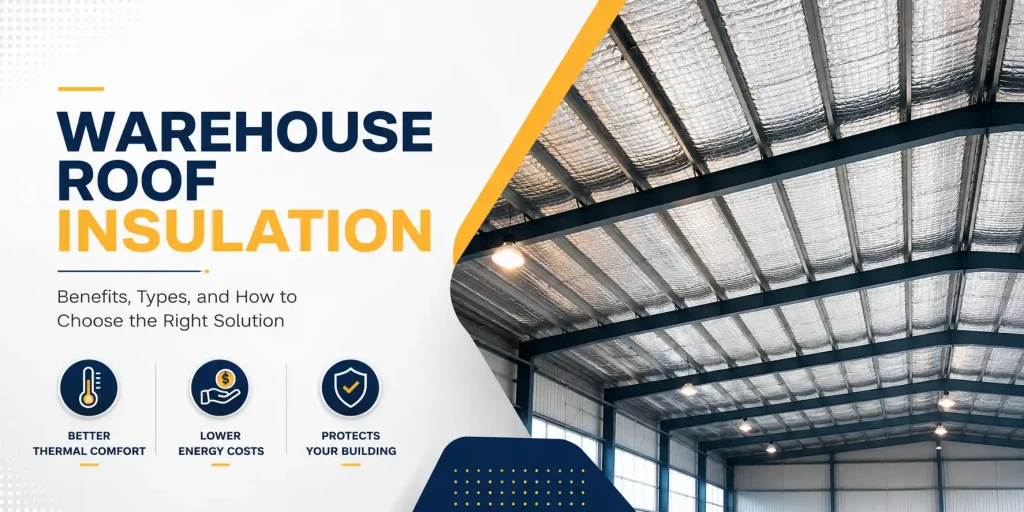
Warehouses are exposed to heat, sunlight, rain, humidity, and changing outdoor temperatures throughout the year. Without proper insulation, a large amount of heat can enter through the roof, making the indoor environment uncomfortable and increasing the need for cooling.
This is where warehouse roof insulation becomes important. A properly designed insulated roofing system can help reduce heat transfer, improve indoor comfort, support energy efficiency, and provide better conditions for stored products and warehouse operations.
For businesses planning a new warehouse or upgrading an existing facility, choosing the right roofing and insulation system is an important part of the building design.
In this guide, we will explore the importance of warehouse roof insulation, its benefits, common insulation options, and the factors you should consider before selecting a roofing solution.
What Is Warehouse Roof Insulation?
Warehouse roof insulation is a thermal insulation layer incorporated into the roofing system to reduce the transfer of heat between the outside environment and the interior of the warehouse.
A typical warehouse roof can receive significant solar radiation during the day, especially in hot climates. Traditional metal roofing without an adequate insulation layer can transfer some of this heat into the building.
Insulated roofing systems are designed to reduce this heat transfer. Depending on the project requirements, they may use materials such as PUF, PIR, or Rockwool as the insulation core.
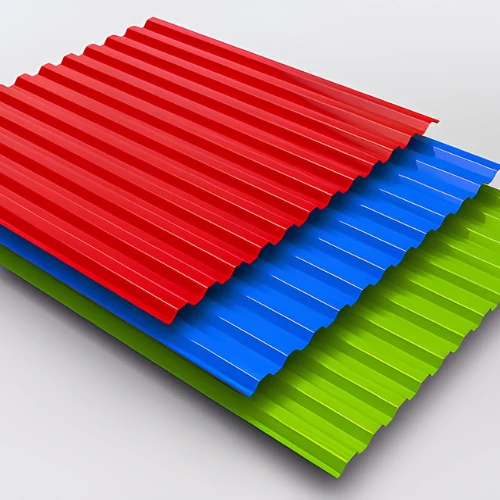
Modern insulated sandwich roof panels combine the external roofing layer with an insulation core, providing both weather protection and thermal insulation in one integrated system.
Why Is Roof Insulation Important for Warehouses?
Warehouses generally have large roof areas, which means the roof can have a major influence on the building’s indoor temperature.
In hot regions, excessive heat entering through an uninsulated roof can make the warehouse uncomfortable for workers and increase the demand for cooling or ventilation.
Effective warehouse roof insulation can help:
- Reduce heat transfer through the roof
- Improve indoor thermal comfort
- Support energy-efficient building operation
- Reduce the cooling load
- Help protect stored materials from excessive heat
- Improve working conditions
- Reduce the risk of condensation-related issues when combined with appropriate moisture management
The exact performance of an insulated roof depends on factors such as insulation material, thickness, roof design, ventilation, installation quality, and local climate.
Benefits of Warehouse Roof Insulation
1. Reduces Heat Transfer
One of the biggest advantages of roof insulation is its ability to reduce heat entering the warehouse from the roof.
The insulation layer acts as a thermal barrier between the hot external roof surface and the warehouse interior. This can be particularly valuable in areas that experience high temperatures and strong sunlight.
2. Improves Indoor Comfort
A warehouse with a large uninsulated metal roof can become extremely warm during the day.
Insulated roofing can help moderate indoor temperatures and create a more comfortable working environment for employees, particularly in facilities where people spend long hours inside.
3. Supports Energy Efficiency
When less heat enters a warehouse, cooling equipment may not need to work as hard to maintain the desired indoor conditions.
As a result, an appropriately designed insulation system can contribute to better energy efficiency. The actual energy savings will depend on the warehouse’s size, usage, climate, ventilation, cooling system, and other aspects of the building envelope.
4. Helps Protect Stored Products
Some products and materials can be affected by excessive heat and temperature fluctuations.
For warehouses storing electronics, packaging materials, chemicals, food-related products, or other heat-sensitive goods, controlling the indoor environment can be an important consideration.
Roof insulation can help create more stable indoor conditions, although temperature-sensitive storage may require additional HVAC or specialized temperature-control systems.
5. Helps Manage Condensation
Condensation can occur when warm, moist air comes into contact with a cold surface.
A properly designed insulated roofing system can help manage temperature differences and reduce the potential for condensation on the underside of the roof.
However, insulation alone does not solve every moisture problem. Proper ventilation, vapour control, drainage, and installation detailing should also be considered.
6. Combines Roofing and Insulation
Insulated sandwich panels can combine the functions of roofing and thermal insulation into one system.
This can simplify the construction process while providing a finished roofing solution suitable for many industrial and commercial applications.
Types of Warehouse Roof Insulation
Different warehouses have different performance requirements. The right insulation material depends on factors such as thermal performance, fire requirements, building usage, budget, and local climate.
PUF Insulated Roofing Panels
PUF, or Polyurethane Foam, is commonly used as the insulation core in sandwich panels.
PUF insulated roofing panels can provide good thermal insulation and are often considered for warehouses, industrial buildings, factories, and commercial facilities where controlling heat transfer is important.
PIR Insulated Roofing Panels
PIR, or Polyisocyanurate, is another insulation option used in building envelope applications.
PIR panels can provide strong thermal performance and may be selected for projects where specific thermal and fire-performance requirements need to be met.
Rockwool Insulated Roofing Panels
Rockwool, also known as mineral wool, is an insulation material often selected when fire resistance and acoustic performance are important considerations.
Rockwool insulated panels can be suitable for certain industrial applications where the project requires additional fire-performance characteristics.
Reflective Insulation
Reflective insulation systems are designed to reflect radiant heat and reduce solar heat gain.
They can be considered for specific roofing applications, depending on the building design and climate. Their performance depends heavily on correct installation and the overall roof assembly.
How to Choose the Right Warehouse Roof Insulation
Choosing the right insulation is not simply about selecting the thickest or least expensive material. The solution should match the warehouse’s actual requirements.
1. Consider the Local Climate
The climate of the warehouse location should be one of the first considerations.
Warehouses in hot and sunny regions may require stronger thermal insulation to reduce solar heat gain, while buildings in other climates may have different insulation priorities.
2. Understand the Warehouse Application
Consider what the warehouse will be used for.
A general storage warehouse may have different requirements from a facility storing temperature-sensitive products, operating machinery, or housing employees for extended periods.
The intended use should influence the choice of insulation and overall building envelope.
3. Check Thermal Performance
Different insulation materials and thicknesses provide different levels of thermal resistance.
Before selecting a panel, evaluate the required thermal performance for the building rather than choosing a product based solely on appearance or initial price.
4. Consider Fire-Safety Requirements
Fire performance can be an important factor in industrial and commercial buildings.
Depending on the application and applicable regulations, the insulation core and complete panel assembly may need to meet specific fire-performance requirements.
5. Evaluate the Roof Structure
The existing or proposed roof structure should be assessed before installation.
Panel weight, dimensions, span requirements, fixing systems, structural loading, and roof design can all affect which insulation panel is appropriate.
6. Pay Attention to Installation Quality
Even a high-quality insulation material may not deliver its expected performance if it is incorrectly installed.
Poorly sealed joints, gaps, incorrect fasteners, and improper detailing can reduce the effectiveness of the roofing system.
Professional installation and proper detailing are therefore just as important as selecting the right insulation material.
Warehouse Roof Insulation vs. Standard Metal Roofing
Standard metal roofing can provide a durable protective layer, but metal itself has relatively high thermal conductivity.
When exposed to direct sunlight, an uninsulated metal roof can become very hot and transfer heat into the warehouse.
An insulated roofing panel adds a thermal insulation layer between the external and internal surfaces.
| Feature | Standard Metal Roofing | Insulated Roofing Panels |
| Weather protection | Yes | Yes |
| Thermal insulation | Limited without additional insulation | Integrated |
| Heat transfer reduction | Lower | Higher |
| Indoor comfort | Depends on ventilation and insulation | Better thermal performance |
| Construction | Basic roof system | Roofing + insulation system |
For warehouses where thermal comfort, energy efficiency, or product protection are priorities, an insulated roofing system may provide a more suitable overall solution.
Why Choose Choice Prefab for Warehouse Roofing Solutions?
Choosing the right roofing system is an important decision for any warehouse construction or renovation project.
Choice Prefab provides roofing and wall panel solutions for industrial and commercial applications, helping businesses select roofing systems based on their specific project requirements.
Their roofing and wall panel solutions can be considered for applications where durability, thermal insulation, weather protection, and efficient construction are important.
Whether you are developing a new warehouse, expanding an existing facility, or replacing an old roofing system, evaluating the right combination of roofing material and insulation can help you make a more informed decision.
Explore Choice Prefab’s Roofing & Wall Panels to learn more about roofing and insulated panel solutions for industrial and commercial buildings.
Where Can Warehouse Insulated Roofing Be Used?
Insulated roofing systems can be considered for a wide range of applications, including:
- Warehouses
- Manufacturing facilities
- Industrial buildings
- Distribution centers
- Logistics facilities
- Workshops
- Commercial storage facilities
- Agricultural storage buildings
- Processing facilities
- Large commercial structures
The appropriate insulation type and panel specification will depend on the building’s purpose, environmental conditions, structural requirements, and desired thermal performance.
Common Mistakes to Avoid When Choosing Warehouse Roof Insulation
Selecting an insulation system without considering the complete building design can lead to poor performance.
Here are some common mistakes to avoid:
Choosing Only Based on Price
The cheapest insulation option may not always provide the required thermal or fire performance.
Consider the total value of the roofing system, including performance, durability, installation, and long-term maintenance.
Ignoring Insulation Thickness
Different buildings have different insulation requirements.
Using insufficient insulation may result in higher heat transfer and reduced thermal performance.
Overlooking Installation Details
Small gaps or poorly sealed joints can affect the performance of an insulated roofing system.
Proper installation and detailing should therefore be part of the project plan.
Not Considering Ventilation
Roof insulation and ventilation work together as part of the overall building envelope.
A warehouse should have an appropriate ventilation strategy based on its size, usage, climate, and internal heat loads.
Ignoring Fire Requirements
The insulation material should be selected according to the project’s fire-safety requirements and applicable building standards.
Selecting Without Assessing the Roof Structure
Before installation, the roof structure should be evaluated to ensure that the selected panels and fixing system are appropriate for the building.
How Does Warehouse Roof Insulation Improve Energy Efficiency?
A significant amount of heat can enter a warehouse through its roof, particularly when the roof is exposed to direct sunlight.
By reducing heat transfer, insulation can lower the amount of heat entering the building. This may reduce the workload on air-conditioning or cooling systems.
However, insulation is only one part of a building’s energy-efficiency strategy.
Other factors such as:
- Roof colour and surface properties
- Wall insulation
- Doors and openings
- Natural or mechanical ventilation
- Air leakage
- Building orientation
- Cooling equipment
- Solar exposure
Can also influence the warehouse’s overall energy performance.
A well-designed building envelope considers these factors together.
Maintenance Tips for Insulated Warehouse Roofing
Once an insulated roof has been installed, regular inspection can help maintain its performance.
Consider periodically checking:
- Roof panels for visible damage
- Panel joints and seals
- Fasteners
- Flashings
- Drainage systems
- Water leakage
- Corrosion
- Roof penetrations
- Areas around vents and other openings
Early identification of damage can help prevent minor roofing issues from becoming larger problems.
Conclusion
A warehouse roof plays an important role in protecting the building while also influencing its indoor environment.
Warehouse roof insulation can help reduce heat transfer, improve thermal comfort, support energy efficiency, and provide better conditions for stored materials and warehouse operations.
From PUF and PIR to Rockwool insulated panels, different insulation solutions can be considered depending on the project’s requirements. The right choice should take into account climate, building usage, thermal performance, fire-safety requirements, roof structure, and installation quality.
For businesses looking for a reliable roofing and insulation solution, Choice Prefab offers roofing and wall panel solutions designed for industrial and commercial applications.
Looking for Warehouse Roof Insulation Solutions?
Planning a new warehouse or upgrading an existing roof?
Talk to us about your roofing and insulation requirements and explore suitable solutions for your project.
Frequently Asked Questions About Warehouse Roof Insulation
What is warehouse roof insulation?
Warehouse roof insulation is a thermal insulation layer incorporated into the roofing system to reduce heat transfer between the exterior and interior of a warehouse.
What is the best insulation for a warehouse roof?
There is no single best option for every warehouse. PUF, PIR, and Rockwool insulated panels may be suitable for different applications depending on thermal requirements, fire-safety considerations, building design, and budget.
Does roof insulation reduce warehouse heat?
Yes. A properly designed and installed insulation system can reduce heat transfer through the roof. The actual indoor temperature improvement depends on the complete building design, insulation specifications, ventilation, and climate.
Are insulated roofing panels suitable for warehouses?
Yes. Insulated roofing panels are commonly considered for warehouses and industrial buildings where thermal insulation and weather protection are required in one roofing system.
How thick should warehouse roof insulation be?
The required insulation thickness depends on the insulation material, local climate, building usage, desired thermal performance, and applicable project requirements. It should be determined according to the specific project rather than using one thickness for every warehouse.
Is warehouse roof insulation useful in hot climates?
Yes. Roof insulation can be particularly useful in hot climates because it helps reduce the amount of solar heat transferred through the roof.
Can roof insulation reduce energy consumption?
It can contribute to lower cooling requirements by reducing heat transfer into the building. However, actual energy savings depend on factors such as the building design, cooling system, ventilation, insulation quality, and local climate.