Every week a factory remains under construction is a week of lost production capacity and delayed ROI. This is where an engineered building changes the game.
Unlike traditional construction, which often gets bogged down by labour shortages or weather, an engineered building is precision-manufactured off-site. It streamlines the entire process, often cutting construction timelines by 50%.
Here is how switching to an engineered building saves you time and capital, without cutting corners on quality.
1. The Parallel Workflow (Do Two Things at Once)
In conventional concrete construction, the process is linear. You have to wait for the foundation to cure before you can even think about the superstructure.
An engineered building allows for parallel processing:
- On-Site: The civil team prepares the land and casts the foundations.
- Off-Site: At the exact same time, we fabricate the structural components in our factory.
By the time your foundation is ready, the steel members arrive, cut, drilled, and ready to install.
At Choice Prefab, we eliminate alignment errors by providing the Anchor Bolt Plan and precise structural design to your civil contractor before fabrication begins. This ensures the columns align perfectly with the foundation, preventing messy rework at the site.
2. Precision Engineering = Zero Waste
Cost savings here don’t come from “cheap” materials. They come from smart design.
We use advanced software like STAAD PRO CONNECT and Tekla. These tools let us calculate the exact Structural Load Bearing capacity needed for your specific usage.
We don’t over-design (wasting steel) or under-design (risking safety). We hit the sweet spot.
Smarter Steel
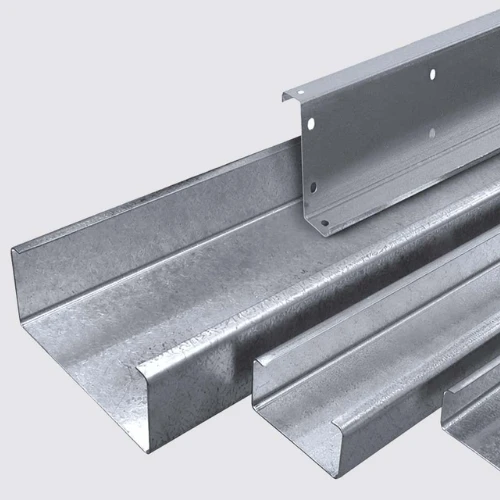
We use ASTM A572M Grade 50 (Type 1, E350) high-tensile “Primary Steel”, sourced from major producers like Tata, Essar, and JSW. Unlike secondary steel often found in lower-quality PEBs, primary steel ensures consistent material properties and safety compliance.
Because this steel is stronger, we can use lighter sections to get the same strength as heavy, lower-grade steel. Lighter steel means:
- Lower transport costs.
- Less load on the foundation (saving concrete).
- Faster lifting during installation.
3. The “Nut and Bolt” Speed
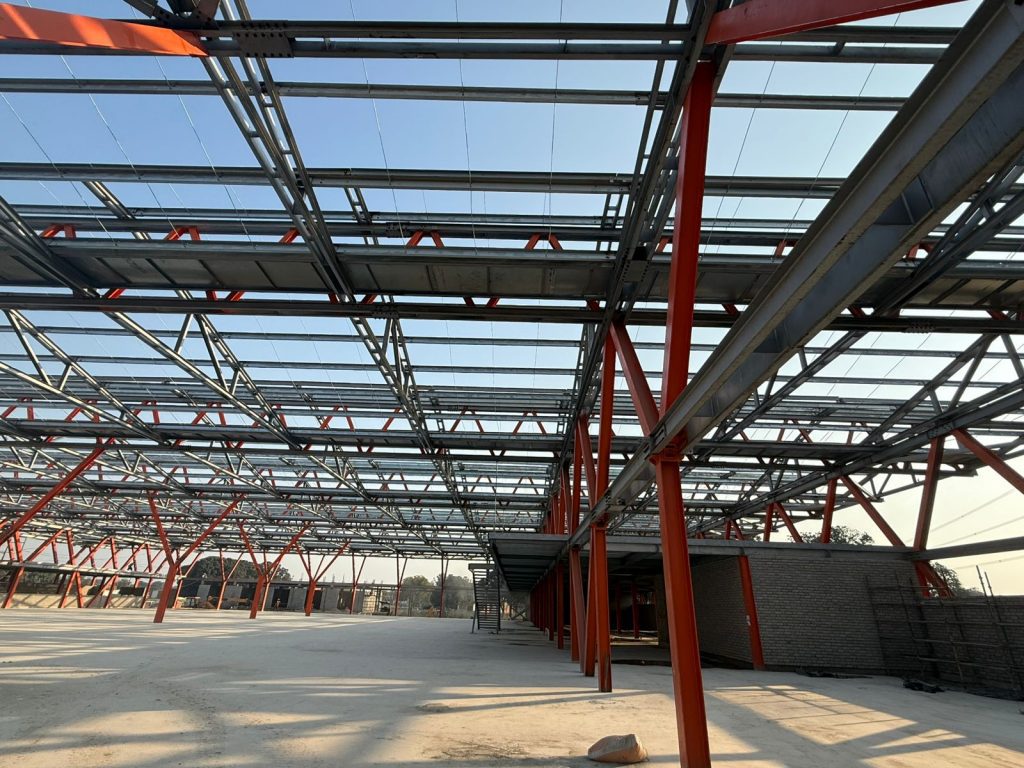
Think of an engineered building like a giant, industrial assembly kit.
- No Site Welding: All primary members are cut, drilled, and painted at the factory.
- Fast Assembly: Components are simply bolted together using high-strength bolts.
This mechanical erection is drastically faster than welding on-site. It reduces your reliance on skilled welders and cuts down rental time for expensive cranes and hydras.
4. Durability is a Cost Saver
The initial build cost is one thing. Maintenance cost is another.
Pre-engineered building manufacturers often get asked: “Will it rust?”
Not if it is built right. To ensure your building lasts decades, we use a robust coating system:
- Paint: Epoxy or PU paint.
- Thickness: Minimum Dry Film Thickness (DFT) of 120 Microns.
This is critical for industries in chemical zones or coastal areas like Dahej.
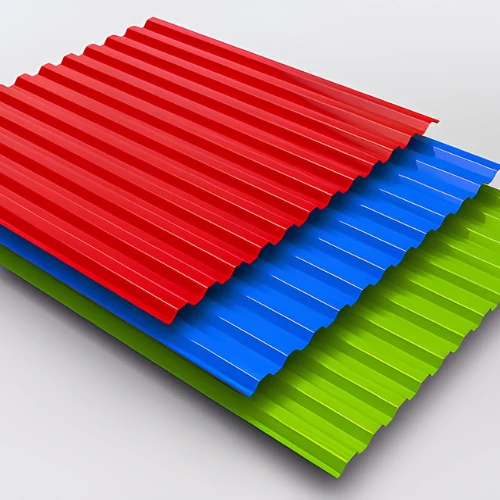
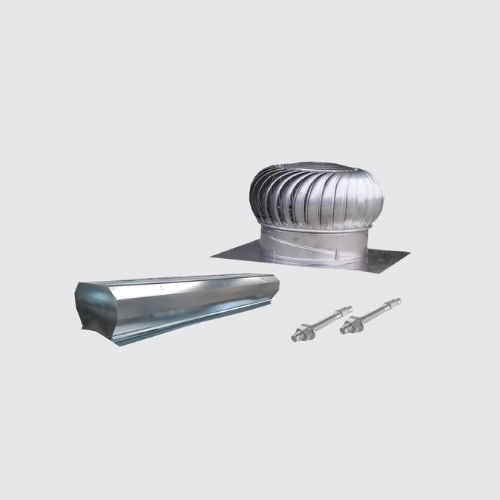
For roofing, we use premium Metal Roofing Sheets sealed with Resibond Silicon and Talon Tack Tapes. This guarantees a leak-proof roof. A dry building protects your machinery and requires far less maintenance.
5. Case Study: Beating the Clock at Dahej
Speed isn’t just a theory.
For Astral Resinova Pvt. Ltd. in Dahej, Gujarat, the challenge was a strict deadline in a tough industrial zone.
Because we could manufacture the structure while the site was being prepped, we bypassed typical delays. The result? A successful handover on a tight schedule, allowing the client to start production immediately.
6. Myth Buster: “It’s Just a Box”
There is a misconception that engineered buildings are rigid and boxy.
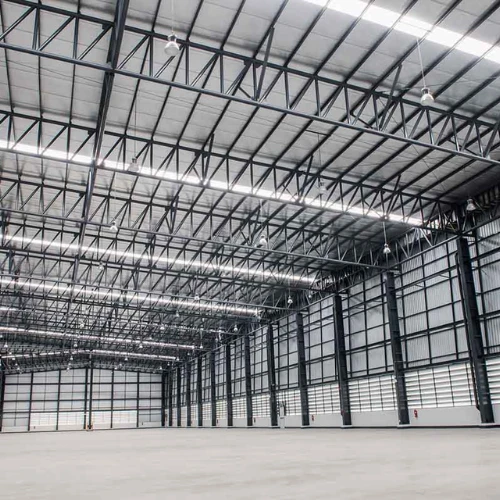
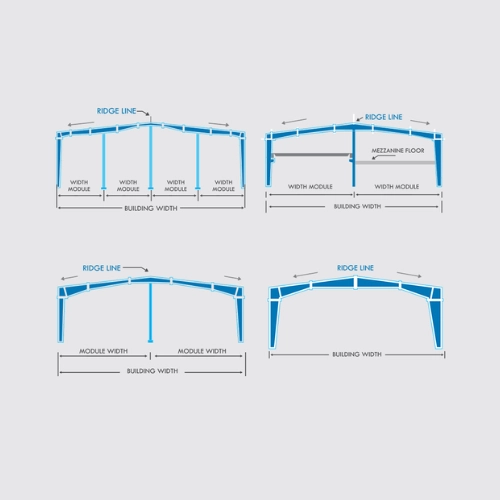
The reality? We have successfully built structures with a Clear Span of 33.84 meters with no centre columns.
This open space is perfect for:
- Logistics and Warehousing
- Large Manufacturing Plants
- Facilities needing free forklift movement
The Bottom Line
When comparing PEB Building Cost vs. concrete, look beyond the quote. Factor in the 50% faster completion, the earlier ROI, and the lower maintenance bills.
The engineered building is simply the smarter financial move. If you are planning an industrial facility and want to see how much time and cost you can save, contact Choice Prefab for a consultation and a detailed cost-benefit analysis.
Frequently Asked Questions
1. What is the minimum project size you accept?
We generally accept projects with a minimum tonnage of 100 MT. This scale allows us to give you the best cost efficiency.
2. Can these buildings withstand cyclones?
Yes. We design with STAAD PRO to meet local wind speed and seismic requirements. Our leak-proof roofing (using Resibond Silicon) handles heavy Gujarat monsoons with ease.
3. Do you do the civil foundation work?
Usually, we provide the design and Anchor Bolt Plan for your civil contractor. However, for turnkey projects, we can handle both civil works and the building erection.
4. Is it really cheaper than concrete?
Generally, yes. These systemic savings come not just from materials, but from reduced foundation requirements, lower on-site labor costs, and a significantly earlier start to business operations. Typically, an engineered building is 20-30% cheaper than conventional steel structures.
5. How do you prevent rust in chemical zones?
We apply high-grade Epoxy or PU paint with a minimum thickness of 120 Microns. This offers superior corrosion resistance for chemical, plastic, and pharma plants.